The war with Iran has upset commodities markets. Attention has, unsurprisingly, centred on oil and LNG. And as always in periods of high volatility, investors’ eyes have been focused on the gold price. We should, at the same time, not lose sight of the bigger picture. Not just because elevated energy prices have systemic economic effects (such as the potential effects of stagflation on currency markets) but because the current conflict poses a broader supply chain disruption.
One sign of the economic squeeze is that the London Metal Exchange Index, which tracks six industrial metals, has recently hit a record high. The rise is being driven largely by aluminium, which carries the index’s largest weighting and has surged in value since the war began.
On the face of it, a squeeze on the third most abundant element on earth is a surprising. But, as Bloomberg points out, “the industry is built on a complex and sometimes fragile supply chain”. Restricted freight traffic and attacks on aluminium production facilities in the Gulf, have seen the industrial metal’s prices spike.
Inventory issues
Aluminium price and supply issues have already affected exposed industries. In Japan, where car manufacturers “get about 70% of their aluminium imports from the Middle East”, automakers have warned they may need to cut back on production (and seek alternative sources of supply).
The parallel with Covid-era disruptions is instructive. Attention is once again falling on inventory management and the underlying fragility of global supply chains. As one analyst observed, “with so much production and export infrastructure tied to a single trade route, even short-term disruptions can produce outsized and immediate consequences worldwide.”
Byproduct blues
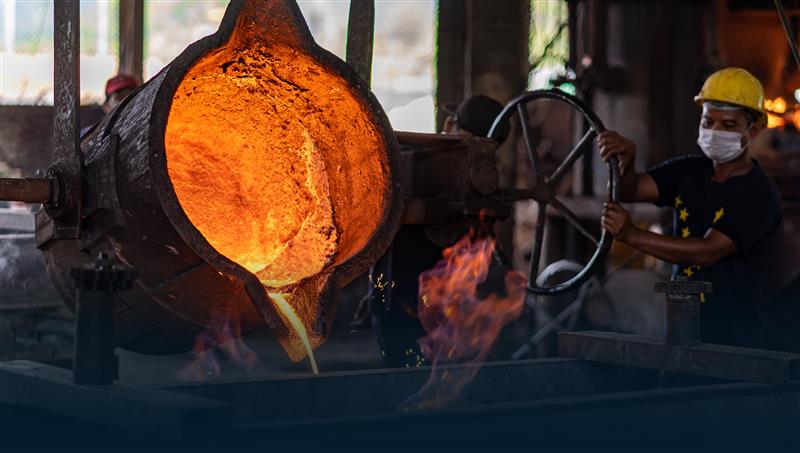
Bottlenecks at energy hubs have consequential downstream economic effects. That includes aluminium production itself. While the element is ubiquitous, aluminium smelting is an extremely energy intensive process, which is why the Gulf, with access to low-cost energy, is a major production centre.
Then there are the diverse, critical though maybe unexpected, byproducts of fossil fuel production. For instance, sulphur is a key byproduct of oil and gas production. Sulphuric acid is an important component in metal mining and refining, and constraints on sulphur supply are putting pressure on copper and nickel supply chain.
Helium, which plays an important role in computer chip production and other high-tech industries, is another byproduct of LNG production. Helium, transported on specialised cryogenic containers, risks being disrupted by bottlenecks in the gulf.
Double shock
Beyond heavy industry, fertiliser is probably the major byproduct of fossil fuel industry. Natural gas is the principal source of hydrogen used in producing ammonia, which is the source of nitrogen for most fertilisers. Gulf countries also produce phosphate fertilisers, leveraging their sulphur supply to process phosphate rock.
For farmers and factories, rising energy prices and rising input costs amounts to a double whammy, with the risks of sustained high prices, supply shortages and sluggish economic growth.
In the longer term, the prospects aren’t necessarily all negative. Supply chain shocks, however severe, have historically proved temporary. If Covid was a global supply chain warning shot, the current moment may prove the wake-up call that drives lasting investment in resilience and diversification. The world economy has proven to be surprisingly resilient, but its long-term trajectory can’t be taken for granted.
All opinions, news, research, analysis, prices or other information is provided as general market commentary and not as investment advice and all potential results discussed are not guaranteed to be achieved. The information may have been derived from publicly available sources, company reports, personal research, or surveys. Past performance is not indicative of future performance. Trading carries risk of capital loss. Service available to professional clients only.